 Spoofy
Tinder Cooldown Bypass: What Works and What Doesn't in 2026
You're mid-swipe, you hit a streak of profiles you actually want to like, and then Tinder cuts you off. "You've been swiping a lot. Come back in 9 hours." The cooldown is one of the most frustrating mechanics in any dating app, and naturally people look for ways around it. Search results promise VPN tricks, account resets, modded APKs that bypass the limit. Almost none of it works. Here's the honest breakdown of what Tinder cooldowns actually are, which "bypass" methods are real, which are myths, and what realistic options you have.
What "cooldown" actually means on Tinder
People use "cooldown" loosely to mean several different things on Tinder, and they have different causes and different fixes. It helps to be precise.
The like cap cooldown. This is the most common one. After roughly 100 likes in a 12 hour rolling window, Tinder shows the "Out of Likes" screen and you can't right-swipe anymore until the window slides forward and some of your earlier likes age out. This is the cooldown most posts are talking about. It's deliberate, documented, and lifted automatically by the passage of time. It only affects right-swipes; left-swipes (passes) are unlimited.
The super-like cooldown. Free accounts get one super-like per 24 hours. After you use it, the option to super-like the next profile is gone until tomorrow. Paid accounts get five per day. The reset is at midnight UTC for most accounts.
The boost cooldown. Boosts are time-limited; you get one free boost a month on free accounts, more on Gold. After you use it, the next one isn't available until your monthly cycle resets.
The shadowban. This is the one people don't realize they have. Tinder hides your profile from the recommendation pool of other users, your matches dry up, and the app gives you no notice. Shadowbans are triggered by behavior Tinder considers suspicious (mass-swiping, modded clients, reports from other users, abrupt geographic jumps, etc). They don't lift on a clock; they lift when Tinder's behavior signals reset, which can take days or weeks.
The hard account ban. This is the one where you can't log in at all. Usually permanent. Triggered by ToS violations like multiple accounts, fake photos, harassment reports, or commercial use.
The first three are normal product limits. The last two are penalties. When people search "Tinder cooldown bypass" they usually mean the first one (the like cap) but sometimes mean the fourth (a shadowban they're trying to escape). The fixes are completely different, so the rest of this post addresses them separately.
Why client-side bypasses don't work
The single most common search result for "Tinder cooldown bypass" is a modded Tinder APK or a third-party app that claims to disable the like cap. These don't work, and it's worth understanding why so you don't burn time on them.
The like cap is enforced on Tinder's servers, not in the Tinder client. Every time the official app sends a /like/{userId} request, Tinder's backend checks how many likes that account has sent in the last 12 hours and either accepts the like or rejects it with a rate-limited response. The client doesn't decide whether you're over the limit; the server does, and it tells the client what to display afterward.
Anything that modifies the Tinder app (a modded APK that strips the cap warning, a hooked client that swallows the rate-limited response) is changing the UI's behavior but not the server's. The like still gets rejected. You just don't see the warning. From your perspective the swipe happens. From Tinder's perspective the like was rejected and the profile is gone from your queue forever. You're worse off than if you'd seen the warning, because now you don't know which of your swipes counted and which didn't.
Third-party tools that connect to Tinder's API directly have the same constraint. They can't bypass the cap any more than a modded client can. What a well-built tool can do is detect the rate-limit response and handle it gracefully (warn you, queue further swipes for later, schedule a notification for when the window resets). That's not a bypass; it's intelligent handling of an unavoidable limit.
The VPN myth
A search for "Tinder cooldown bypass" will surface a lot of advice that says "use a VPN to change your IP and reset the cooldown." This doesn't work, but it's worth explaining why, because the misconception is widespread.
Tinder's rate limit is keyed to your account, not your IP address. The system that counts your likes is checking your account ID (passed via your session token), not your network origin. Connecting through a different IP doesn't fool Tinder into thinking you're a different user; you still send the same auth headers, you still identify as the same account, the cap still applies.
A VPN does change the geographic location Tinder thinks you're in, which can be useful for other things (swiping in different cities, accessing the service from countries where it's blocked). But it does nothing to the like cap.
The closest thing to "VPN bypasses the cooldown" that's true is that signing up for a new account from a new IP, with a new phone number, and a new device fingerprint, gives you a brand-new like budget. That's not bypassing the cooldown, that's avoiding it by becoming a different user. It's also a maintenance treadmill that gets you increasingly hard to maintain as Tinder layers on detection (device fingerprinting, photo hash matching, payment card linking, etc.).
The "delete and reinstall" myth
Another piece of common bad advice: delete your Tinder account, wait an hour, sign up again, get fresh likes. This also doesn't work for the like cap.
When you delete a Tinder account, the deletion is real on the user side (your profile becomes inaccessible to other users, your matches lose access to your chat history). But Tinder retains a back-end record of the deleted account for fraud and abuse purposes, including the phone number and email associated with it. If you sign up again with the same phone number, Tinder either refuses or links the new account to the old one in their system.
To genuinely start fresh you'd need a new phone number, a new device, ideally a new payment method, and patience to age the new account enough that it doesn't trip new-account fraud heuristics. Even then you only escape the like cap until you hit it again on the new account 12 hours later. The fix is temporary.
For shadowbans, "delete and reinstall" is sometimes effective if you do it thoroughly (factory-reset the device, change the phone number, change the photos). For the like cap, it's not.
What actually works
Strip away the bypass mythology and the realistic options are these.
Wait. The like cap is on a 12 hour rolling window. If you used 100 likes in the last 12 hours, the cap lifts gradually as the oldest likes age out. Doing nothing for 6 hours gets you about half your budget back. Doing nothing for 12 hours gets you all of it. This is the option Tinder is funneling you toward and it's free.
Pay. Tinder Plus ($10/month), Gold ($30/month), or Platinum ($40/month) remove the like cap entirely. If you're regularly hitting the cap and getting good match returns, the math on Plus is often favorable: $10 a month is less than a takeout meal, and unlimited likes on a free account is the kind of friction that pays for itself in conversation hits.
Queue. Use a companion app that lets you keep swiping after you hit the cap and dispatches the queued likes for you when the window resets. This is the closest thing to a real "bypass" that exists, in the sense that it removes the user-facing friction of the cap without violating Tinder's API contract or risking a ban. You're not bypassing the cap, you're just not letting it interrupt your flow. The likes still go out at Tinder's pace.
Accept the cap and use it strategically. Some users find they get better match rates when they swipe selectively within the cap than when they had unlimited swipes. The cap forces a quality filter. If you only get 100 right-swipes a day, you tend to spend them on profiles you actually want to talk to, which produces matches that produce conversations. If you had unlimited, you'd swipe right on a thousand profiles and dilute the signal.
For shadowbans, the realistic options are different. Stop doing whatever triggered it (rapid swiping, modded clients, behavior that looks like a bot), wait two to four weeks, see if the shadowban lifts. If it doesn't lift after a month, the only fix is a fresh account on a new phone number.
A practical example of the queue approach
To make the queue idea concrete, here's how it actually plays out in practice for a user.
You open your companion app at 7pm. You start swiping. You burn through 100 likes in 20 minutes because you're feeling decisive. The app warns you that you've hit Tinder's cap.
You keep swiping. The app no longer fires likes immediately to Tinder; instead it stores each right-swipe in a local queue with the profile data. You don't get instant match feedback for these swipes, but you also don't waste them. You go through another 60 profiles and the app has 60 likes queued up.
You close the app and go to sleep. In the background, the app waits for Tinder's 12 hour window to slide forward. As budget becomes available (one slot every 7 to 10 minutes), the app fires the next queued like, gets the response, and removes the entry from the queue. If a queued like produces a match, the app fires a system notification to your phone. You wake up to find that some of your queued swipes turned into matches overnight, complete with notification badges.
You open the app the next morning. The queue is mostly drained. You see the new matches at the top of your message list. You start swiping again with a fresh budget.
The user-perceived effect is that the cooldown stops existing. There's no "Out of Likes" wall you slam into. Tinder still enforces the cap, but the cap becomes an invisible thing the app manages instead of an obstacle you have to schedule your life around.
What about combining methods
The strongest realistic setup combines three things. A companion app with the queue feature, used at human-normal swipe rates during active sessions, on an account that hasn't tripped any anti-fraud signals. This gives you the closest thing to friction-free swiping that exists for free accounts, without putting the account at meaningful ban risk.
What does put the account at ban risk: combining a companion app with mass right-swiping on everyone, or with rapid account-switching, or with modded clients. Any one of these alone is borderline. Two together is asking for a shadowban. Three is asking for a hard ban.
The honest framing: the queue isn't magic. It moves the cooldown from a user-visible wall to an invisible scheduled dispatch. Tinder still gets the same 100 likes a day from your account, just spread out over time. As long as your usage pattern looks like a human who occasionally swipes intensely and then doesn't touch the app for hours, Tinder has no reason to flag the account.
How to try this
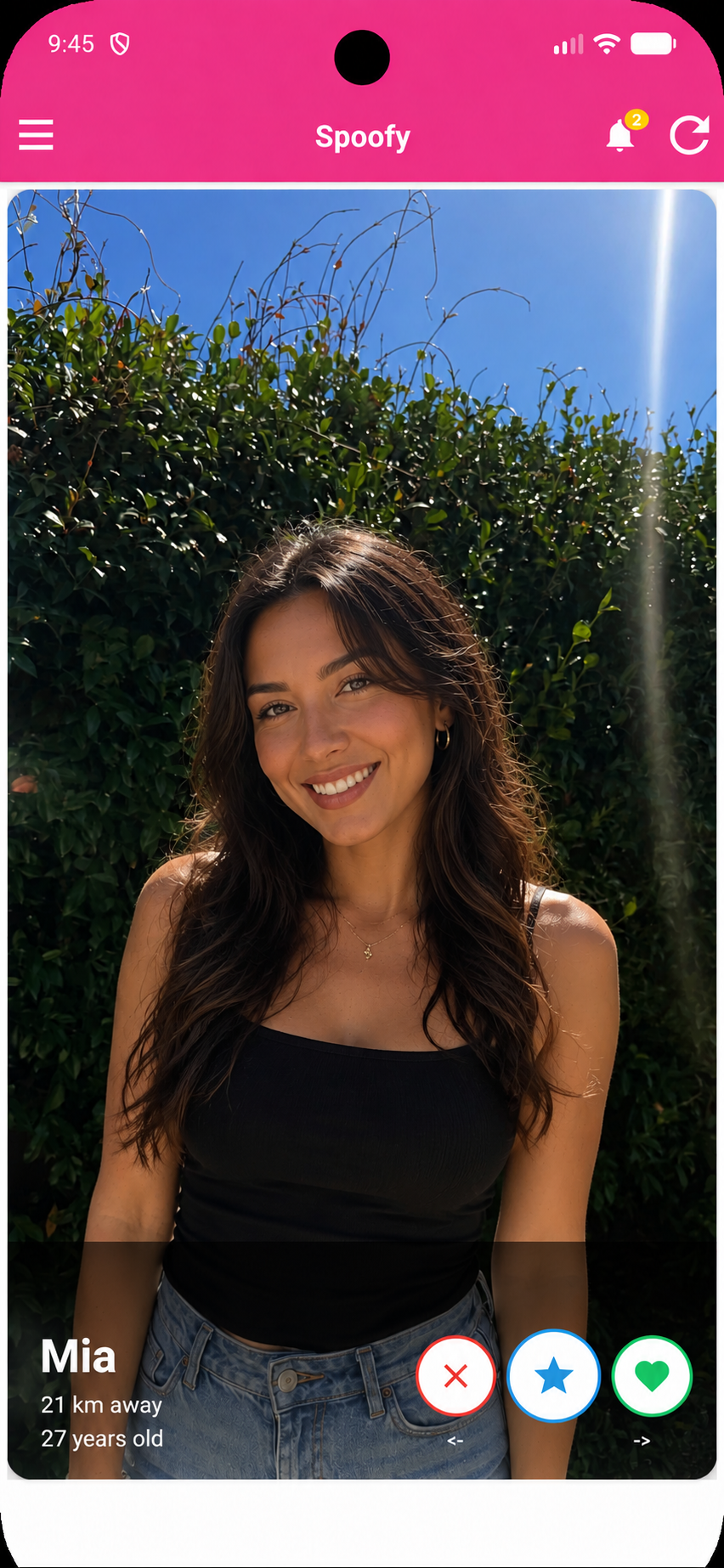
The queue approach requires a companion app that implements it. I build a free Android one called Spoofy that handles rate-limit detection and is designed around the queue-based dispatch pattern. You can find it at sspoofy.com.
There are other tools in the same category. Whatever you pick, the criteria for safety are: it should connect to Tinder's API the way the official client does (not via modded Tinder, not via accessibility automation), it shouldn't ask for your Tinder password directly, it should be transparent about what data leaves your device, and it should respect Tinder's rate limits rather than try to circumvent them.
A note on shadowbans
If your problem isn't the like cap but a shadowban that's killing your match rate, none of the above helps directly. The realistic recovery playbook is: stop using any automation, swipe at strictly human rates (no more than 50 likes per session, ideally fewer), keep your usage pattern varied, and wait two to four weeks. If the shadowban lifts, you'll see your match rate recover. If it doesn't, a new account on a new phone is the only remaining option.
There's no companion app that bypasses or fixes a shadowban. Anything claiming to is selling you nothing.
Related reading
For the broader picture of Tinder's like cap and why "unlimited likes APK" search results are mostly traps, start here.
If you want to spot which profiles to prioritize when you do have like budget, the post on seeing who liked you without Gold covers the probability-scoring approach.
For an overall survey of Tinder automation tools on Android and how to pick a safe one, this post is the umbrella overview.
Comments
Loading comments…